
%20(2).jpg)

Launching an omnichannel campaign is easy. It’s proving what made it successful that’s difficult for most advertisers.
While digital channels often receive the credit in an omnichannel campaign because they generate clicks and conversions, they don’t tell the full story. Consumers don’t live entirely online. In fact, most of their day is spent moving through the physical world, where digital out-of-home (DOOH) reaches them uninterrupted.
Modern DOOH measurement enables you to understand not only who had the opportunity to see your campaign but also how that exposure contributed to brand awareness, foot traffic, purchase intent, and real business outcomes. That exposure rarely works alone. It reinforces what a consumer already saw on social or TV, and it typically sets up the next touchpoint, whether that’s a website search or trip to the store. In other words, DOOH is no longer just measurable. It has become an essential part of omnichannel measurement.
How DOOH Measurement Actually Works
It’s time to answer the burning question: How to measure OOH advertising?
One of the biggest misconceptions in the digital out-of-home industry is that it’s hard to measure. If someone were to walk by a digital screen in Times Square or drive past a billboard on the highway, how could you track whether that advertisement made a meaningful impact on the business?
Turns out, you absolutely can track that (and more). DOOH measurement provides detailed attribution that goes far beyond impression count. In fact, many of the same measurement KPIs used in online digital campaigns can be applied to DOOH campaigns as well.
How is OOH advertising measured?
There are several ways to measure DOOH depending on your campaign goals. If you’re trying to understand how many people saw the campaign, the focus would be on DOOH audience measurement. If you’re determining whether the campaign influenced consumer behavior, attribution studies, brand lift, and foot traffic analysis are available. To evaluate overall campaign performance, DOOH analytics link advertising exposure to meaningful business outcomes, such as increased customer retention or ROI.
Rather than relying on a single metric, OOH campaign measurement combines several data sources to tell the full story. For example, advertisers can measure:
- Verified impressions
- Reach and frequency
- Audience demographics
- Brand awareness
- Purchase intent
- Website visitation
- Foot traffic
- Sales lift
- Return on ad spend (ROAS)
When looked at together, these metrics tell the full story, from how many people saw the campaign to what happened afterward.
How to measure impressions for a DOOH campaign
One of the most common questions marketers ask is, “How do you actually measure impressions if people aren’t clicking on an ad?”
Unlike digital advertising, DOOH doesn’t rely on cookies or clicks to estimate exposure. Instead, audience measurement for digital signage combines traffic patterns, mobile location data, anonymous device movement, venue visitation trends, and data from third-party measurement providers to estimate how many people had the opportunity to view a screen during the campaign.
Campaigns can also leverage first- and third-party audience data to reach very specific consumers rather than advertising randomly to anyone who passes a screen. Layering in 5,000+ audience segments based on shopping and brand behavior, psychographics, interests, demographics, occupation, travel, health and fitness, and politics ensures your advertisement reaches the right audience in proximity to the screen placement.
Location adds another layer of precision through point-of-interest (POI) targeting. This allows brands to place their advertisements in specific locations that are relevant to the campaign objective. It’s like promoting your new restaurant on digital billboards within a 10-mile radius of the location or advertising a fitness app on digital screens in and around gyms. Or, in this case, running a 7-11 advertisement outside of 7-11 storefronts.
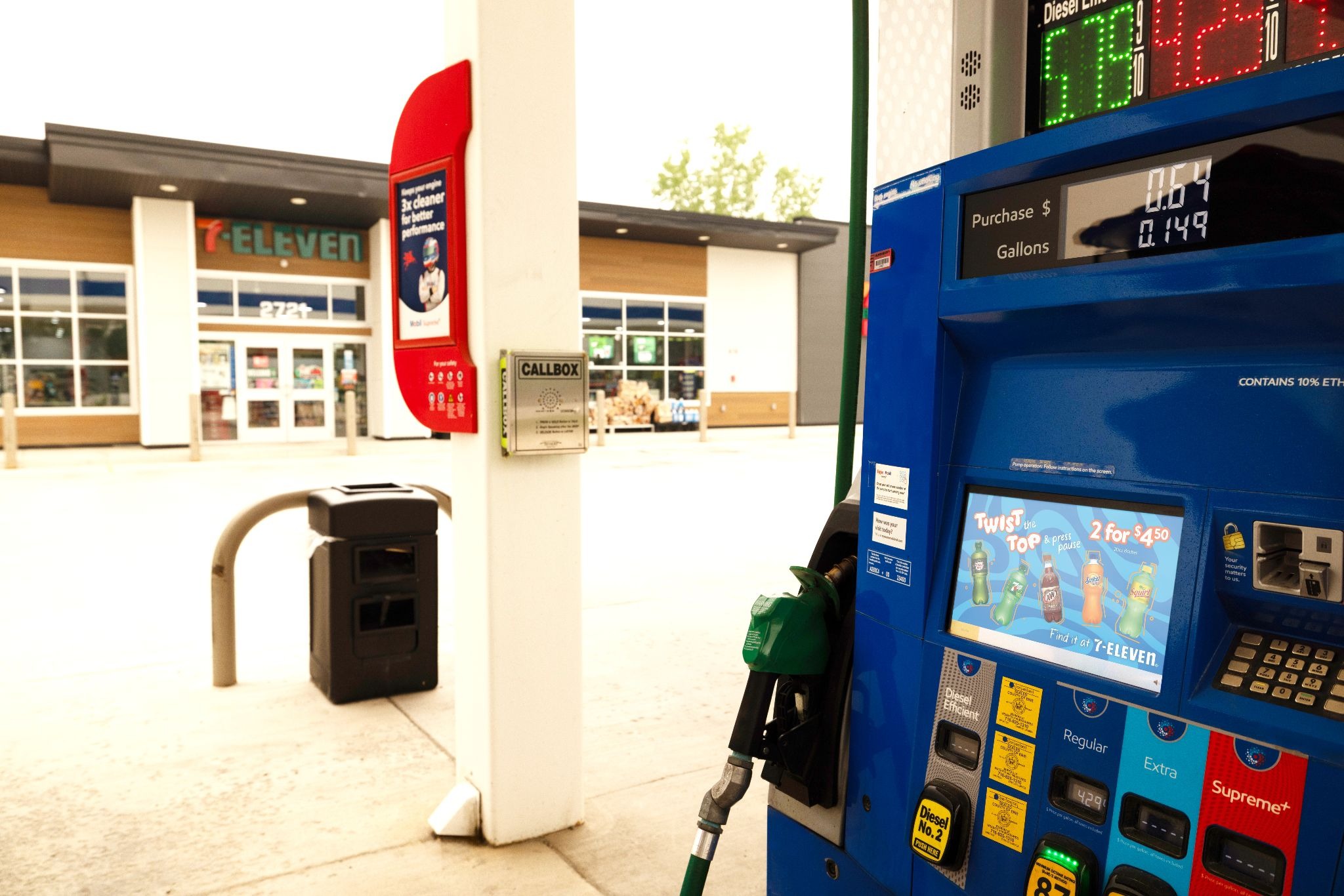
This combination of audience intelligence and real-world context is what makes DOOH measurement so powerful. Reaching the right people in the right places. The full value comes when you connect DOOH to everything else happening across your marketing campaign. That’s where omnichannel attribution begins.
Where DOOH Fits Into Omnichannel Attribution
Attribution isn't just about proving ROI after a campaign ends. It helps marketers make smarter decisions before the next one begins. Knowing which channels influenced awareness, drove store visits, or generated purchases allows brands to confidently invest future budgets where they'll have the greatest impact.
Think about the last time you bought something… what influenced your decision? Maybe you saw a social media advertisement when scrolling on Instagram. Later that afternoon, you noticed a digital billboard on your commute home. Then, when watching TV before bed, that same ad appears on your screen. You are finally curious enough to search for the brand online, visit the website, and a few days later make the intended purchase.
Which channel deserves the credit? The answer is all of them.
It’s rare that consumers will convert after a single interaction with a brand. Instead, omnichannel campaigns guide consumers from one touchpoint to another, down the funnel, moving them closer to making a purchasing decision.
For years, DOOH sat at the top of the funnel, used mainly for brand awareness. There was a disconnect between DOOH and measurable business outcomes. Fortunately, technology advancements and attribution partners like ABCS Insights have solved that.
Using a privacy-first, cookieless, and PII-free methodology, ABCS links media exposure to business outcomes through deterministic, test-versus-control models and scalable, survey-based approaches. This full-funnel measurement is powered by a unified consumer panel dataset covering over 40 million U.S. households. Their platform provides retailer-specific, item-level sales data across nearly all major verticals (including CPG, QSR, hospitality, finance, travel, and technology).
“DOOH has been primarily viewed as an awareness channel — a key reason for this was the inability to measure sales outcomes and prove the full impact of the channel”, shared Tom Acquaviva, Chief Revenue Officer at ABCS Insights. “Now that we can measure sales impact, brands can use DOOH as a strategic part of their omnichannel mix and prove its effectiveness across the consumer journey. We’re thrilled to be working with partners like Screenverse to showcase how DOOH has earned its place in media plans.”
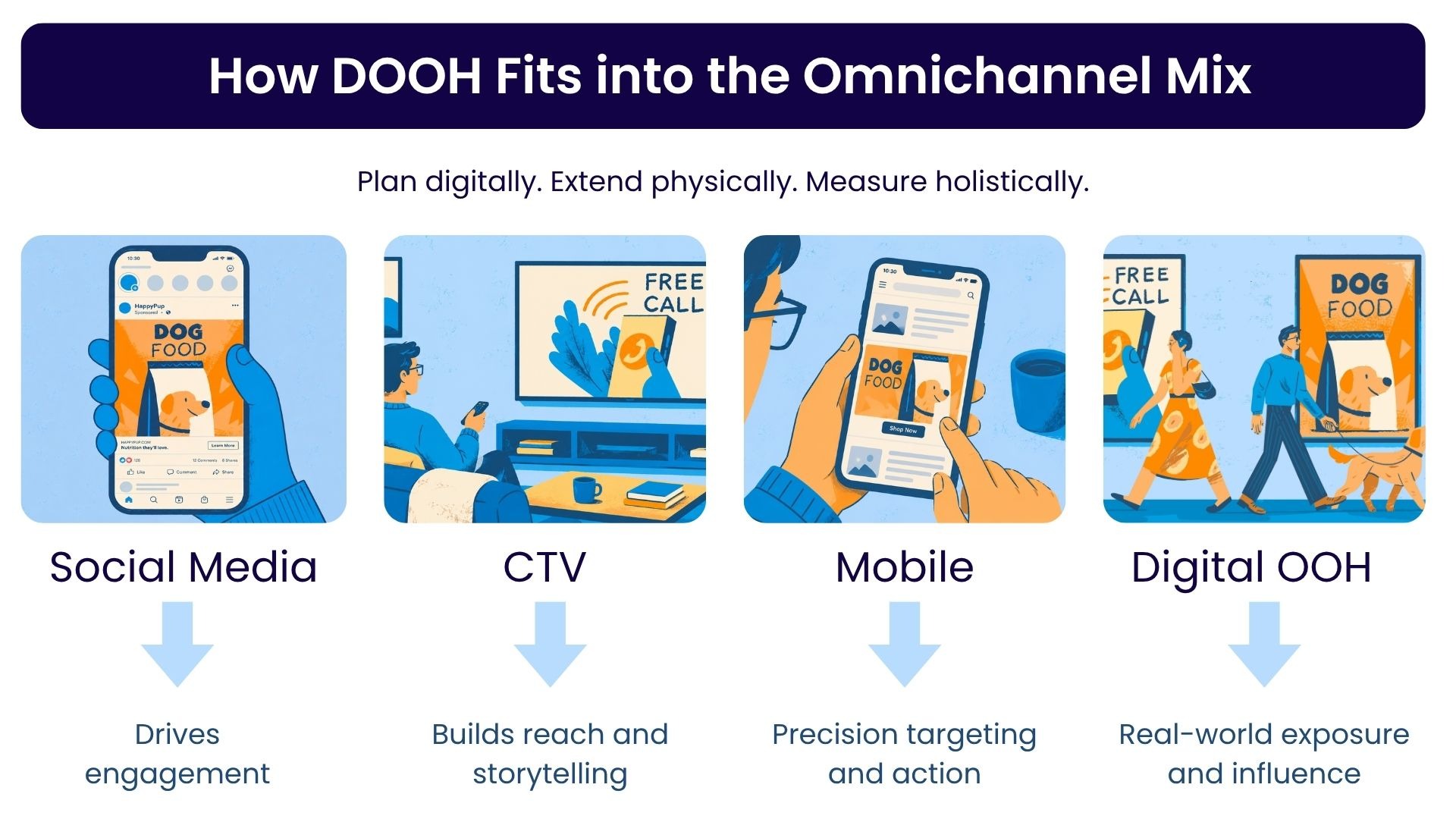
Rather than measuring DOOH in isolation, it can be evaluated alongside other media to demonstrate customer journey attribution. Instead of focusing on which channel specifically generated the conversion or final touchpoint, omnichannel measurement identifies clear patterns on how each channel worked together. Our guide to omnichannel marketing explores the role DOOH plays in a typical campaign and how it works alongside other channels to amplify the campaign.
How to Measure DOOH’s Impact, Step by Step
Now that you understand how DOOH fits into the customer journey, we’ll walk through how to actually measure its impact.
Step 1: Identify your campaign goals
Your campaign objective determines which marketing measurement and attribution strategy you’ll use throughout the campaign. A retail campaign often prioritizes foot traffic and store visits, whereas an e-commerce campaign focuses on website traffic, conversions, and ROAS.
Step 2: Reach the right audience
One of the biggest advantages of DOOH is the ability to target highly relevant audiences with first- and third-party data. Utilize extensive targeting to reach relevant audiences.
Step 3: Measure Exposure
After a campaign launches, it’s important to understand who saw it. This can be evaluated through verified impressions, reach, frequency, audience composition, screen performance, and geographic distribution.
Step 4: Measure what happens next
Measurement partners like ABCS Insights compare audiences exposed to your campaign with similar audiences who weren’t exposed. This allows advertisers to isolate the impact of DOOH and understand if the campaign influenced behavior rather than relying on assumptions.
Step 5: Optimize your next campaign
Evaluate what audiences responded best, which venue types were the strongest, and which locations generated the highest engagement to improve future campaigns. You no longer have to question how to measure marketing attribution. Looking at omnichannel metrics and evaluating performance across the full customer journey will showcase how each touchpoint contributed to the final outcome.
So, to sum up, how does omnichannel attribution improve marketing ROI? It helps marketers understand which combinations of channels drive the strongest business results. With an omnichannel campaign that includes DOOH, you elevate the reach and mitigate potential gaps in reaching people.
Measure DOOH in your Next Omnichannel Campaign
With today's technology, measuring a campaign is much easier once you know the fundamentals and how all the pieces work together. Understanding how DOOH fits into an omnichannel campaign is great, but understanding its impact on other channels is the real win.
If you're ready to build a smarter omnichannel strategy or want to learn more about how Screenverse measures campaign performance, contact our team. We'd love to help you create a campaign that's just as measurable as it is impactful.

.png)
%20(12).jpg)


.png)