


Advertisers aren’t just competing for attention. They’re competing for outcomes. Today, a consumer might start their morning watching the news in their kitchen, scroll through social media during a break at work, listen to a podcast on their commute home, and stop at a grocery store or gas station before the day ends. The experience is continuous, even if the media is not.
Advertisers, increasingly, are catching up to that reality. For years, the industry has responded by building what it calls omnichannel strategies, campaigns designed to follow a consumer across devices and platforms. But even the most sophisticated of these plans tend to share a blind spot. They operate largely within digital environments, optimizing for attention, engagement, and efficiency on screens.
What they often miss is where decisions actually happen. Not on a phone. Not on a connected television. But in the physical world, in stores, in transit, in the everyday spaces where intent turns into action. This is where digital out-of-home advertising, or DOOH, has quietly begun to take on a different role. It is not simply another channel to be added to a plan. Increasingly, it is being used as the connective layer between digital campaigns and real-world behavior, a way of carrying influence beyond the screen and into the environments where it can create tangible, measurable outcomes.
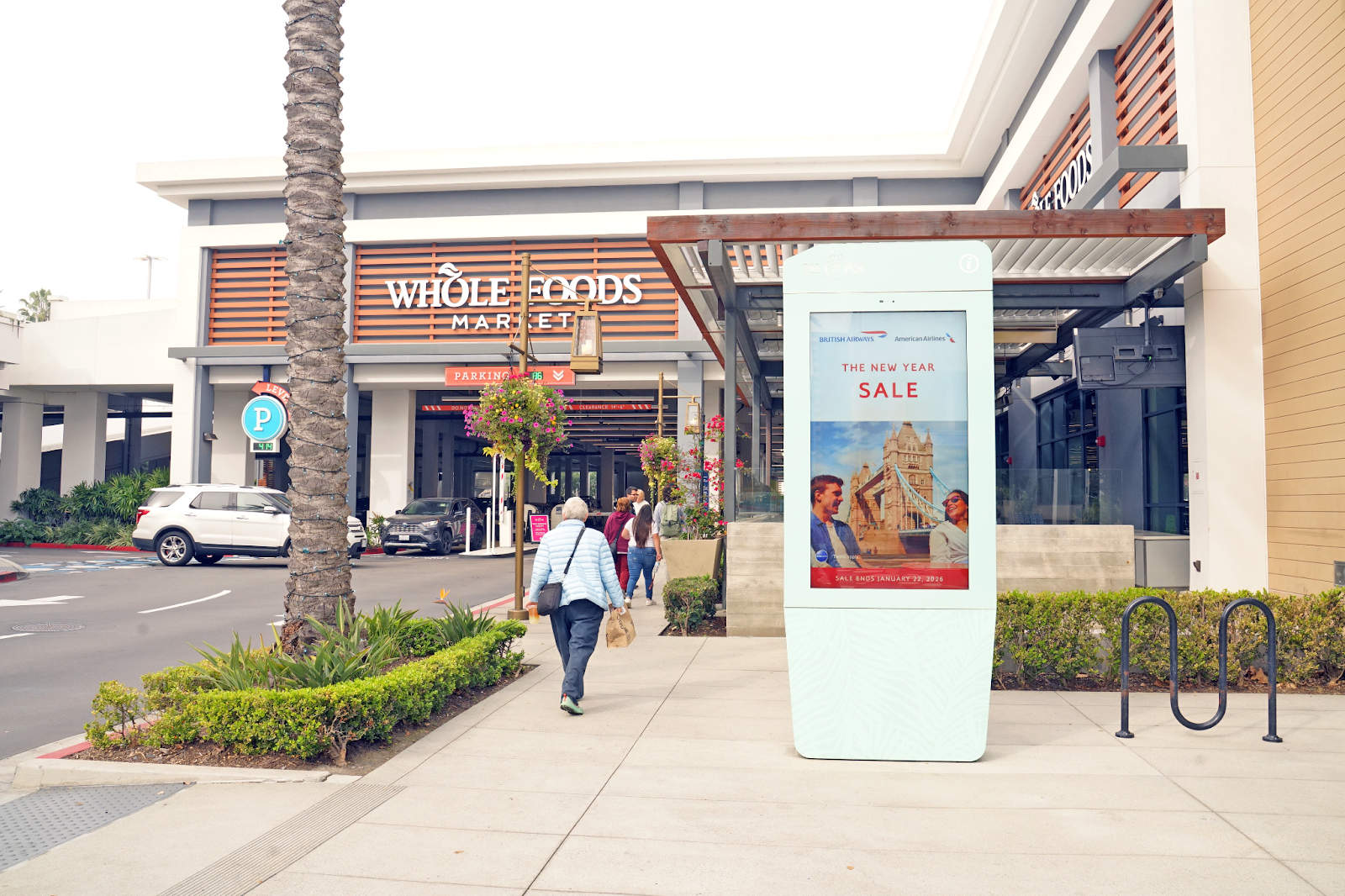
A Medium Defined by Place
Part of the difficulty in understanding DOOH lies in how often it is reduced to a single idea. Billboards, perhaps, or screens in public spaces. In practice, it operates much more like a familiar concept in programmatic: a portfolio of publishers, each with a distinct role in performance.
Traders have long understood that not all supply is created equal. High-performing publishers are selected not just for scale but also for context, audience quality, and their role within a campaign. In-app ads drive awareness differently than a niche, high-intent environment. A premium video publisher is valued differently from long-tail display inventory. Supply path optimization exists to prioritize these differences, not flatten them.
DOOH functions in much the same way.
Each screen environment behaves like its own publisher. Large-format billboards and urban panels operate like high-reach, premium video, establishing presence at scale. Retail, grocery, and pharmacy networks resemble high-intent environments, where proximity to purchase increases the likelihood of action. Office buildings, residential networks, and transit hubs act more like frequency-driving publishers, reinforcing messaging through repeated exposure over time.
The question is not whether to use DOOH, but how to curate it.
Just as traders build supply paths that favor certain publishers over others to achieve campaign goals, DOOH requires the same level of intentionality. The value is not always in accessing every screen but in selecting the right environments to match the role each part of the campaign is meant to play.
What has changed in recent years is that this curation can now happen within the same programmatic systems traders already use. Through private marketplace deals and preferred supply paths, DOOH inventory can be structured, prioritized, and optimized alongside digital channels, rather than sitting outside of them.
In that sense, DOOH is not a departure from programmatic thinking. It is an extension of it, applied to the physical world.
DOOH Is Built to Drive Real-World Results
The reason DOOH continues to gain traction across programmatic teams is simple. It performs against the metrics advertisers increasingly care about. Not clicks. Not completion rates in isolation. Real-world outcomes.
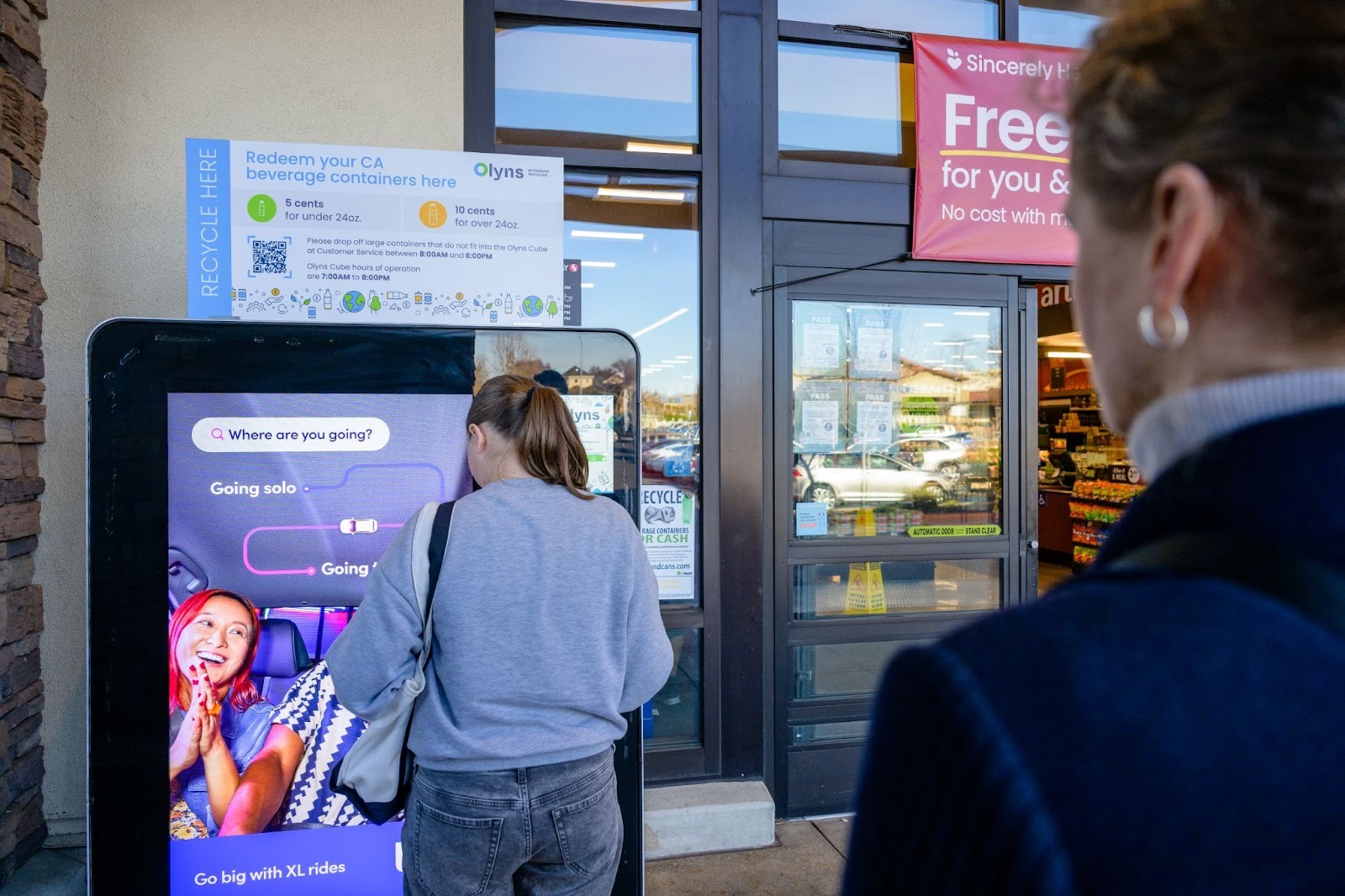
DOOH ads appear in high-traffic, real-world environments that naturally align with moments of decision-making. A screen outside a retailer does more than deliver an impression. It influences what happens next. A consumer sees a product on their way in, and that message follows them into the store. The impact is immediate, even if it is not captured in a click.
That is why the data looks different. According to the OAAA, 78% of U.S. adults take action after seeing a DOOH ad, 47% take action on their mobile device, and 40% visit an advertiser’s website. Regarding the impact on purchase decisions, 54% of consumers say DOOH influences their purchases, while 63% of Gen Z and Millennials report the same.
These are not awareness metrics. They are indicators of behavior. DOOH does not just deliver impressions. It drives movement, engagement, and conversion in the environments where those outcomes actually occur.
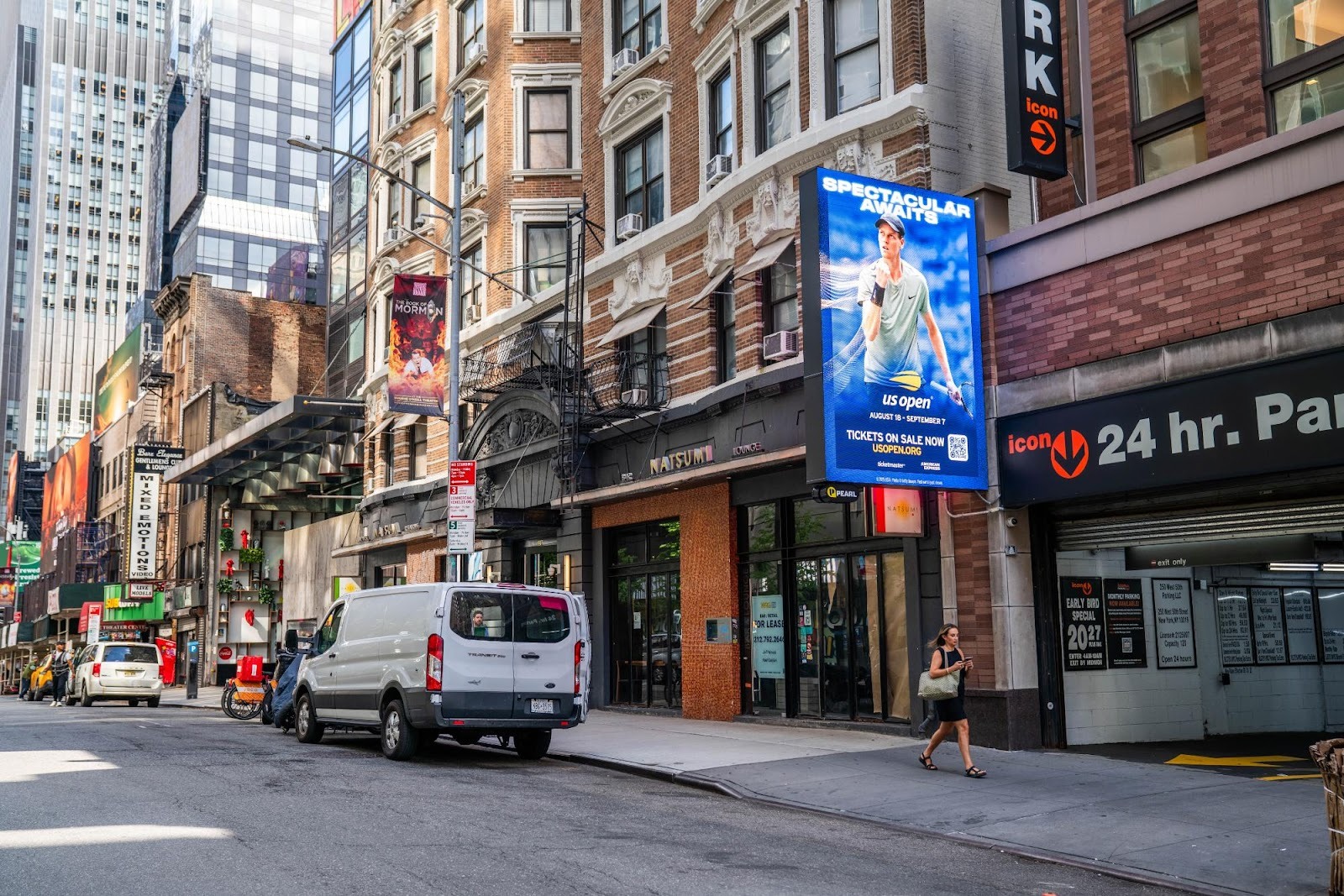
From Exposure to Action
Still, the perception persists that DOOH cannot be measured with the same rigor as digital. That perception is increasingly outdated. Measurement in DOOH has evolved into a full-funnel discipline, one that mirrors, and in many cases exceeds, the depth of analysis applied to other programmatic channels. Through partnerships with measurement providers like ABCS Insights, DOOH campaigns can now be tied directly to business outcomes across awareness, consideration, and conversion.
At the top of the funnel, survey-based studies measure shifts in brand awareness, favorability, and purchase intent. At the mid-funnel, foot traffic attribution uses location data and mobile identifiers to quantify incremental store visits driven by exposure. And at the bottom of the funnel, transaction-level data, including receipt and credit card datasets, connects exposure to actual sales, enabling true sales lift analysis and clear ROAS calculations.
This is not modeled guesswork. It is built on deterministic, test-versus-control methodologies, in which exposed audiences are directly compared with matched control groups to isolate the impact of media. The result is a measurement framework that reflects how advertising actually works. Campaigns can now be evaluated not just on impressions delivered, but on:
- Foot traffic driven
- Brand awareness and perception shifts
- Engagement and conversion behavior
- Incremental sales and verified ROI / ROAS
In practice, this allows DOOH to be held to the same, if not higher, standard as other programmatic channels. And it changes how traders can position it. Because the conversation is no longer about whether DOOH can be measured. It is about what kind of outcomes it is uniquely positioned to drive.
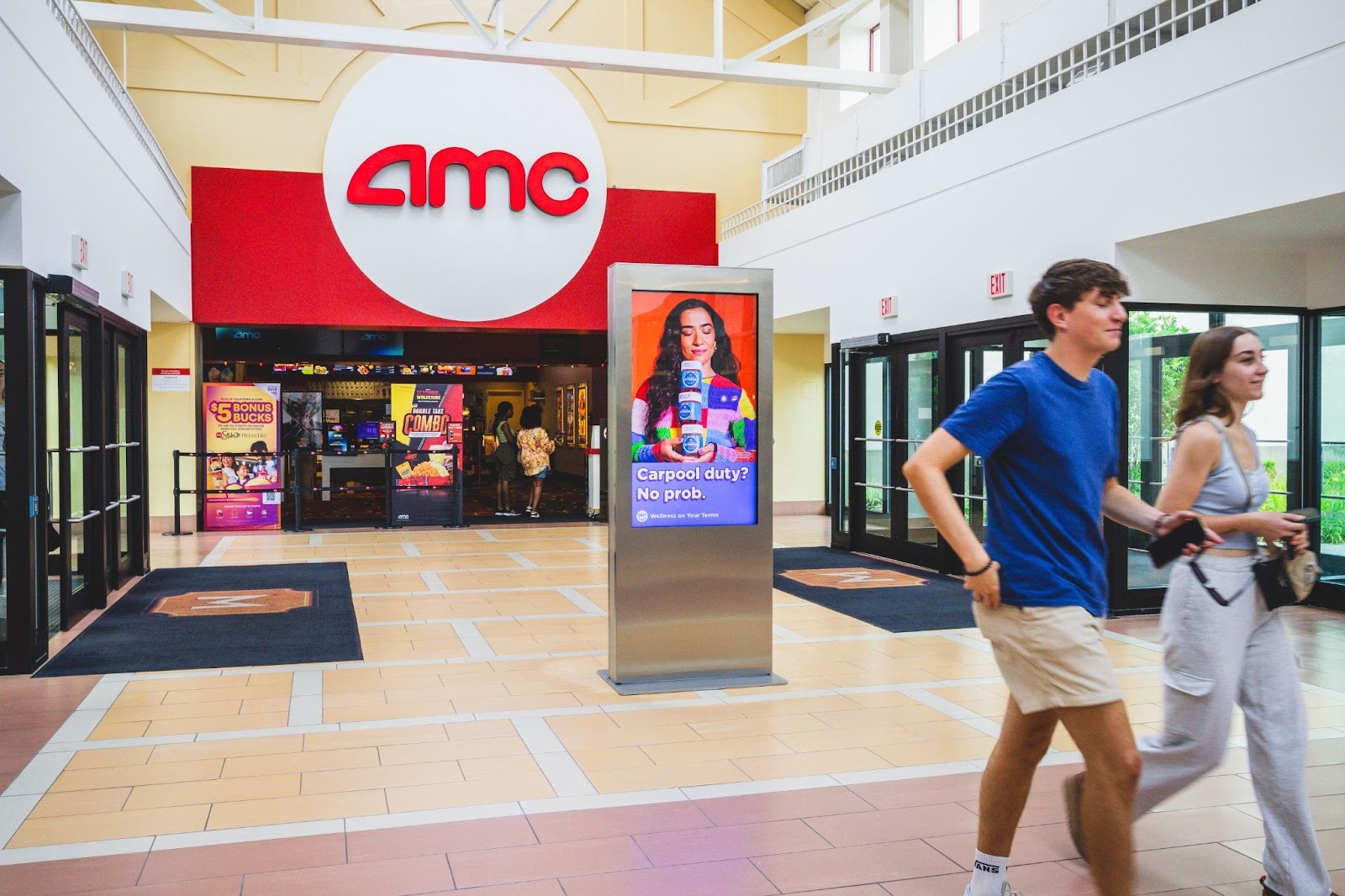
Extending the Logic of Programmatic to DOOH
Traders refine supply paths, prioritize high-performing publishers, and build curated marketplaces designed to deliver against specific audiences with precision. The logic is consistent across display, video, and CTV: identify where the audience over-indexes → route spend accordingly → optimize toward outcomes.
DOOH does not sit outside of that system. It extends it.
DOOH inventory is accessible through every major DSP (demand-side platform). The same platforms used to activate display, video, and CTV campaigns now offer access to digital screens across retail, transit, residential, office, and lifestyle environments. From a buying perspective, the mechanics are familiar. Deals are transacted through PMPs, preferred deals, and open exchange. Targeting is applied using the same audience frameworks that traders already rely on.
The difference is not in how it is bought. It is where it shows up.
Instead of solely selecting publishers, traders are evaluating environments or “venue types”. And those environments can be evaluated with the same rigor. Through supply-side curation and data enrichment, it is now possible to identify which screens and venue types over-index for specific audiences, such as frequent travelers, QSR customers, fitness enthusiasts, or high-income urban consumers.
This is where DOOH becomes particularly powerful for audience-based investment pools.
Rather than treating DOOH as a broad awareness channel, it can be mapped directly into audience strategies. Budgets can be allocated against curated sets of inventory that align with the same segments being activated across digital channels. The result is a more cohesive, cross-environment execution where the audience definition remains consistent, even as the context shifts from screen to space.
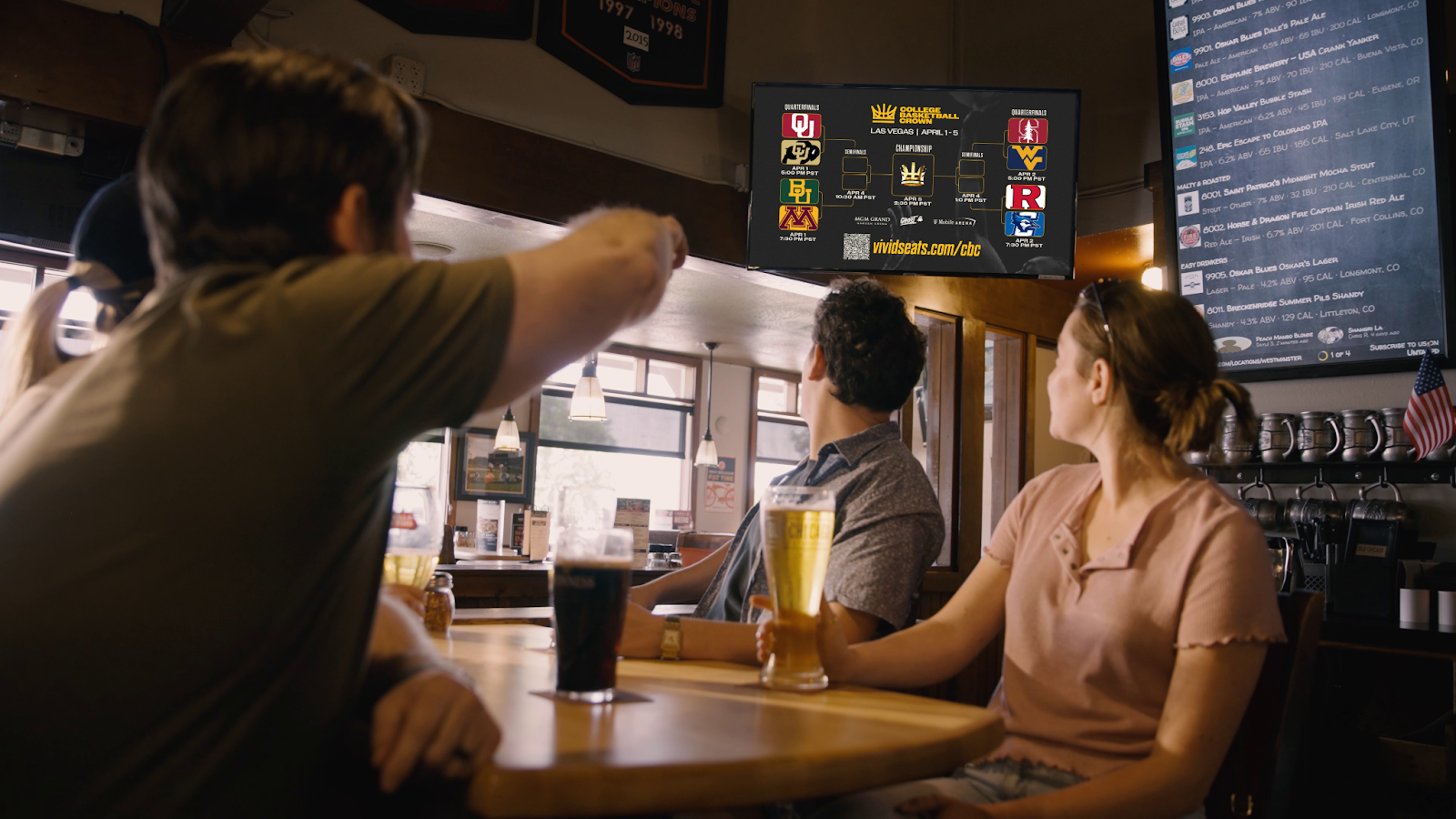
Extending Video Budgets Into the Physical World
Video investment, in particular, has become increasingly concentrated in the living room. CTV has captured a growing share of spend, driven by its targeting capabilities, premium content, and measurable outcomes. As that investment has scaled, it has revealed an obvious opportunity: consumers watch television, but they don’t live inside it. They move through the world. They commute, shop, work, exercise, and socialize. And yet, much of video strategy remains confined to a single environment. DOOH closes that gap, but not all DOOH inventory serves the same role in doing so.
The mistake is assuming every screen can function as an extension of video. It cannot.
Static screens, low-dwell environments, or formats without sound or content adjacency do not replicate the conditions that make video effective. They play a different role in the media mix, often better suited for awareness or frequency.
The true extension of video lives within video- and audio-enabled environments where content is already being consumed:
- Screens in bars and restaurants streaming live sports
- TVs in gyms playing long-form programming
- Waiting rooms, lounges, and transit environments where audiences are engaged with content, not just passing by it
These are not just screens. They are viewing environments. This is where DOOH becomes a seamless extension of CTV. The same creative can run in these environments without disruption, maintaining narrative continuity while expanding the context in which it is experienced. The message does not feel like an interruption. It feels like part of the viewing experience.
DOOH acts as a memory anchor for CTV campaigns, reinforcing messaging beyond the home and increasing recall through repeated exposure in real-world environments. It drives incremental reach by capturing audiences that are not fully addressable on CTV or may be underexposed within existing frequency caps. And it introduces a high-attention layer, placing messaging in environments where consumers are present, engaged, and often closer to the point of decision.
Consider live sports.
Brands routinely invest millions into a single national broadcast spot to reach audiences watching a major game at home. But that same audience is not confined to the living room. It is in bars, restaurants, and social venues, watching the same game, often with higher engagement, longer dwell times, and fewer competing distractions.
DOOH allows advertisers to reach that same audience, in those same moments, without the cost barrier of a broadcast buy. The investment is a fraction of the price.
The audience is the same. The moment is the same. The difference is access. The impact is not just additive in the traditional sense. It is a force multiplier. Campaigns that extend beyond the living room do not simply reach more people. They become more memorable, more contextual, and more likely to influence behavior.
DOOH Solves Challenges Modern Advertisers Face
At Screenverse, we firmly believe that DOOH works best as a complement, not a replacement for other channels. Including the medium as a core pillar of the omnichannel mix strengthens the connection between online and offline media and helps address the challenges many advertisers face.
Attention Scarcity:
- Challenge: Digital channels today are oversaturated as brands compete for attention. Between banner ads taking over desktop displays, story ads dominating social feeds, and in-stream video ads playing as audiences stream their favorite show, it’s become strikingly difficult to capture attention.
- DOOH Solution: DOOH advertising allows brands to take over an entire screen (billboard, spectacular, urban panel, etc.) with no digital clutter or competition. With ads playing for 15 seconds or 30 seconds full screen, DOOH ensures that attention and visibility are at an all-time high
Signal Loss & Cookie Depreciation:
- Challenge: With an increase in privacy regulations and more consumers opting into ad-blockers and cookie-free browsing, advertisers have reduced visibility into user data and behavior, which ultimately limits targeting and measurement capabilities.
- DOOH Solution: With DOOH, advertisers reach real audiences in physical environments without relying on user-level tracking. Through key partnerships with data and analytics companies, we can help advertisers target audiences based on demographics, lifestyle and interests, shopping and brand behaviors, media consumption, and more in 100% brand-safe environments.
CTV Fragmentation:
- Challenge: Audiences are fragmented across platforms, causing limited unified reach.
- DOOH Solution: Advertising in the physical world provides broad, incremental reach outside the home to unify and expand omnichannel campaigns. While CTV is great and serves a purpose, when combined with DOOH, it becomes much stronger. A Magnite Study 2025 found that brands running cross-channel video and DOOH campaigns see a 29% increase in brand recall and a 32% increase in purchase intent vs. single-channel efforts.
DOOH Will Lead the Next Frontier of Omnichannel Advertising
And yet, accessing DOOH at scale has historically been fragmented. Inventory has been dispersed across networks, formats, and venue types, making it difficult to apply the same level of curation and control that traders expect from other channels.
This is precisely why Screenverse exists.
Within the broader omnichannel ecosystem, Screenverse brings together fragmented supply into structured, accessible marketplaces that align with how traders already plan and buy media. We enable the same principles of supply path optimization, audience alignment, and deal-based activation to be applied to physical environments.
In doing so, we remove the friction that has historically limited DOOH adoption and position the channel where it belongs, not at the edge of the plan, but as the linchpin of all other channels on the plan. The future of programmatic extends beyond the screens we hold or watch at home. It includes the ones we move through every day.
For advertisers looking to stay ahead, the opportunity is clear:
DOOH isn’t just part of the media mix. DOOH is where digital becomes unforgettable.




.png)