View
SCroll

The Field Guide to Back-to-School DOOH Advertising

How Screenverse's DOOH network reaches Back-to-School shoppers all season long, plus ideal venue types, targeting, and measurement solutions.
By
Madelin Gomez
,
Associate Director, Brand Marketing

Somewhere around Memorial Day, before a single "back to school" display goes up in a store window, a third of American parents have already started shopping. By early July, two-thirds have. By September, families are still buying backpacks, calculators, dorm furniture, the whole list, right up until the bell rings.

Back-to-school used to be a two-week sprint in late August. In 2026, it's a shopping season spread across multiple months, starting as early as June and ending in mid-September. It's worth every effort to get right: K-12 spending hit $39.4 billion in 2025, the second-highest on record, and total back-to-school retail sales are projected to climb to $85.42 billion in 2026. Parents are planning to spend $489 per child, up nearly 12% year over year.

That's a lot of families, making a lot of decisions, over a long stretch of time, almost all of it happening in everyday physical environments: in store aisles, in parking lots, on the drive to a major retailer. Screenverse's digital out-of-home (DOOH) network sits in exactly those moments. With more than 130,000 screens across all 210 U.S. DMAs, spanning retail, residential, office, outdoor, and urban environments, we reach back-to-school shoppers everywhere the season actually plays out, not just where a media plan assumes it does.

Extending Digital Campaigns into Real World Environments 

Back-to-school shoppers don't experience "channels” as they prepare, browse, and shop for school. They see an ad on Instagram, drive past a billboard on the way to Walmart, and get a retargeted display ad that night, all as part of one continuous decision. 

With programmatic DOOH, it now runs on the same infrastructure as the rest of the digital stack: audience data, real-time bidding, dynamic creative, and unified reporting. This means a back-to-school OOH campaign can be planned, bought, and measured in the same system as display, native, and CTV, instead of sitting off to the side as a standalone line item.

In practice, that looks like:

  • A shopper sees a DOOH ad near a retail entrance, then gets served a retargeted display ad reinforcing the same message that evening.
  • Footfall data ties that DOOH exposure to an actual store visit, closing the loop between impression and outcome.
dover fueling solutions 4courtmedia

When to Plan & Activate Your Back-to-School Campaign

The single biggest planning mistake advertisers make when it comes to back-to-school campaigns is treating it like a two-week August sprint. Consumers are shopping earlier and taking multiple trips to various retailers to find what they need. The data speaks for itself:

  • 44% of consumers have already received shopping lists from schools as of early June, up from 38% last year.
  • 32% of back-to-school shoppers have started shopping in June, with Millennials and Gen-Z leading among other age groups
  • 29% of consumers will continue to shop in September, and campaigns must run beyond the summer season to reach back-to-school shoppers in the moment
Consider the following planning timeline:
  • June: Early-bird campaigns targeting the third of shoppers already browsing. Lighter weight, awareness-focused, near retail and malls.
  • July: Peak ramp. This is when major retail promotional windows cluster (Prime Day, Target Circle, Walmart Deals all landed in late June this year), so OOH weight should scale up around those moments, not just around back-to-school generically.
  • August: Highest-intent window. Full weight, proximity-to-retail placements, urgency-driven creative.
  • September: Don't pull budget on the first day of school. Nearly a third of shopping intent still lands here, and the messaging shift (from "deal-hunting" to "list completion") is a cue to adjust creative, not cut spend.

Targeting Back-to-School Audiences 

Back-to-school isn't one audience segment; while some think it’s just parents and families, it’s actually three core segments, and they don’t shop alike. 

Parents and families are the core K-12 buyers. 74.8% of parents expect to spend more this year, but 71.3% say the back-to-school season is more about finding value than brand loyalty, and 80.6% say they'd switch brands for a meaningful discount, according to recent consumer research by Snipp. Advertisers should consider contextual placements near major retailers such as Walmart, Target, and Best Buy, as well as discount retailers. 

College students are a separate, higher-spending audience with different needs (dorm gear, electronics, apparel) and different media behaviors. They spend more time on social media and are more UGC-driven. Our urban and residential inventory near campuses and off-campus retail corridors reaches this audience in their daily environment rather than trying to catch them mid-scroll. In college campuses and universities, digital screens in elevators reach college students where scrolling isn't an option. Attention is at an all time high as they ride the elevator to and from class—considering their next purchase and must-have school essentials.

Teachers are a smaller, often-overlooked third audience, worth a dedicated, lower-weight layer near schools for office-supply and classroom-adjacent brands.

How to target back-to-school shoppers with data:
  • Leverage third-party audience data to identify OOH screens that over-index against your desired audience segment. This ensures the screen placement is not only in the right location, but also serves the right audience.
  • Layer contextual signals like time of day (weekday after-school hours near retail, weekends near malls) and proximity to schools or campuses.
  • For value-driven parents, pair proximity targeting with creative that leads with savings and one-stop convenience, matching how they're actually making decisions this year.
digital billboard OOH advertising

Ideal Venue Types for Reaching Back-to-School Shoppers

We’ve curated a diverse DOOH portfolio across 30+ venue types and dozens of OOH media networks to maximize the coverage of the consumer journey. When it comes to back-to-school shoppers, we have inventory in every core environment that shoppers move throughout over the course of the season.

Retail. The highest-intent environment there is. Screens located outside brick-and-mortar stores (EV charging screens, urban panel screens, self-service kiosk screens) are the first touchpoints that engage shoppers before they enter the store. Screens in retail environments, such as malls, grocery stores, and major retailers, reinforce messaging at the moment of purchase.

Residential. Screens in lobbies, elevators, and common areas in apartment and condo buildings reach parents and college students in repeated, low-distraction moments at home. This venue type is ideal for reaching shoppers before the trip even happens. Advertisers who leverage Screenverse’s residential inventory can further segment audiences based on household income, lifestyle, and proximity to specific retail locations.

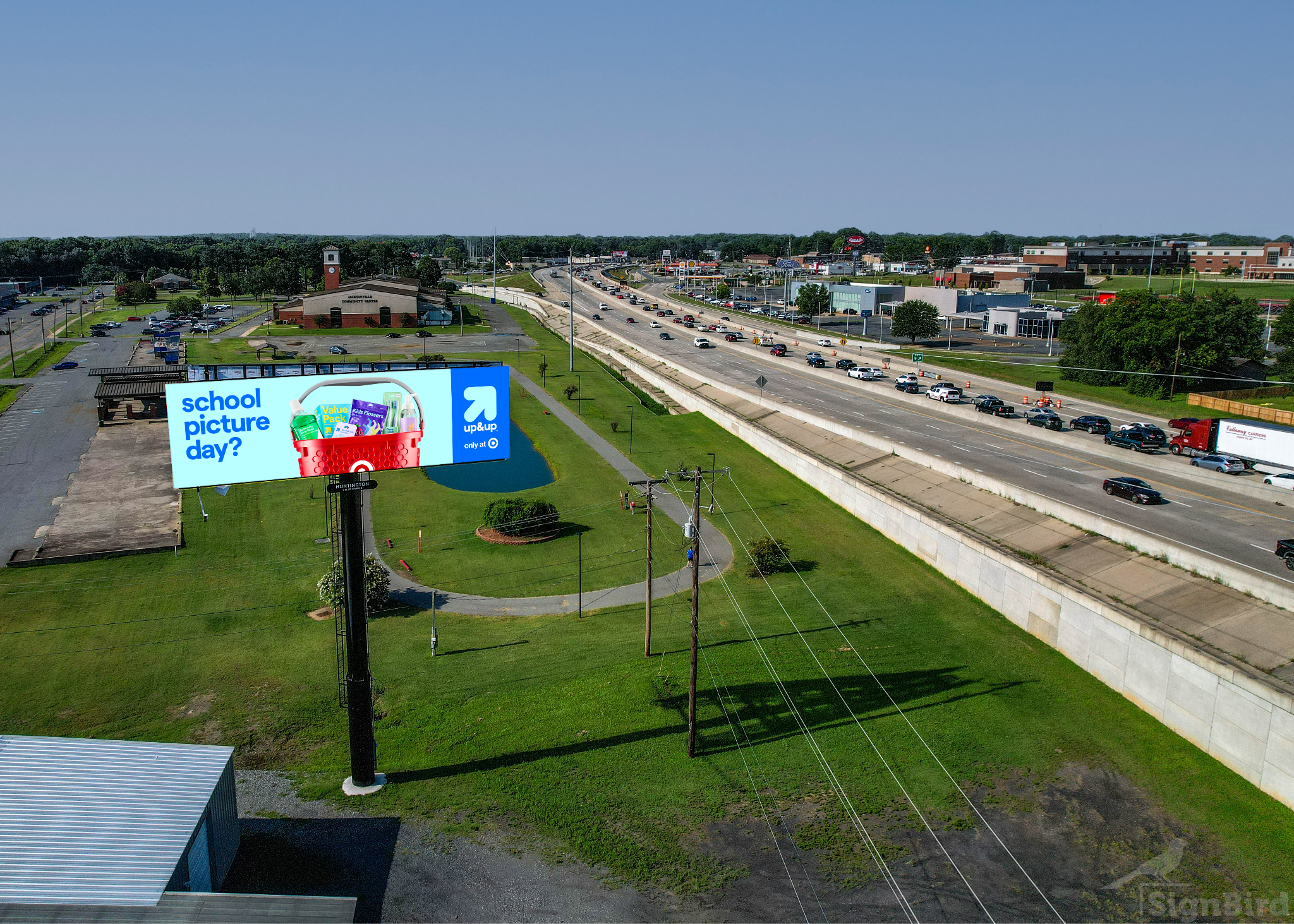
Outdoor. Roadside and billboard inventory builds broad reach along the routes families actually drive to reach retail destinations, priming the message before they ever walk in the door. The Screenverse billboard portfolio spans more than 2,800 digital billboards across dozens of independent operators, providing advertisers with access to unique and major markets through a single point of access.

Urban Environments. Digital screens in high-traffic city centers and shopping corridors reach students, young shoppers (college audiences), and families moving through retail centers and transit routes. Urban panels and window panels are great for reinforcing messaging and driving in-store foot traffic to a nearby location.

Office. A smaller but useful layer for reaching working parents during the day, particularly for early-season, plan-ahead messaging before the after-work retail trip. Screens in elevators, lobbies, hallways, and common areas reach the working parent where other channels simply cannot- making office OOH inventory a valuable venue type to include for back-to-school campaigns.

Together, these five environments cover the full arc of the season, from the first browsing session in June to the last-minute list run in September, without leaning on any single moment to carry the whole campaign.

Don’t just take our word for it. Hear from StackAdapt’s Nick Ortega, Director of Inventory Development, on leveraging Screenverse’s inventory for back-to-school campaigns:

"Back-to-school isn't just a moment anymore; it's a months-long shopping journey. Programmatic DOOH extends an omnichannel strategy into the physical world, working alongside display, native, audio, connected TV (CTV), and other digital channels to reach consumers from discovery to purchase. With Screenverse's DOOH retail footprint, brands can engage shoppers where buying decisions are made and measure real-world impact beyond the screen".

back to school OOH advertising strategy

Creative Considerations to Ace Your Campaign

Back-to-school creative works when it respects two constraints: the audience is on a deadline, and DOOH is a glance, not a read. Consider the format and design around it: for billboards, keep it simple with larger, bolder messaging, as audiences on the go have limited attention spans. For screens in high-dwell environments like gas stations and EV charging stations, use audio-enabled video creative that engages audiences with 15-second and 30-second spots.

  • Keep it list-mode, not lifestyle-mode. Shoppers are executing a checklist under time pressure. Simple, high-contrast messaging that reads in a matter of seconds (a single product, a price, a single value prop) outperforms mood-board-style creative in this category.
  • Message to the moment, not just the season. Creative near a specific retailer in July should look and sound different from creative near a mall in September. Depending on the flight dates, adjust messaging to reflect the moment (early bird sale, clearance specials, extended sales, full availability).
  • Seasonal vs. always-on. Back-to-school-specific creative should carry the flight, but brands with year-round OOH presence shouldn't go dark on their always-on messaging entirely. Instead, layer the seasonal push on top rather than replacing it, so the brand doesn't disappear the moment the season ends.
  • Design for the format. Dark backgrounds and high contrast read better on digital screens than light/white-heavy creative. Keep it to one idea per screen.

How Did Your Campaign Score? Measurement in OOH

One of the biggest shifts in OOH over the past few years is measurement, and it matters more for back-to-school than almost any other season. What used to be the hardest channel to prove out is now one of the easiest to tie to real results, especially when it's planned alongside other digital channels rather than run in isolation. 

Footfall attribution connects a shopper's exposure to a DOOH ad near a given retailer or mall entrance with an actual visit to that store, and that same exposed audience can be retargeted across display, native, and CTV, giving a clear line from screen to site to sale, right as families are executing their back-to-school list. 

Through our partnership with ABCS Insights, Screenverse offers comprehensive measurement solutions so advertisers can understand brand lift, foot traffic, sales lift + iROAS as well as how DOOH performs alongside other channels to paint the perfect omnichannel picture.

Measurement considerations for back-to-school:
  • Foot traffic lift: using footfall attribution to connect DOOH exposure to visits at target retail locations, the most direct read on whether placements near a given retailer, malls, or discount retailers are actually driving store visits.
  • Brand recall/awareness lift: standard brand lift studies, particularly useful for the parts of the campaign running earlier in the season (June/July), before purchase intent peaks.
  • Online activity: retargeting DOOH-exposed audiences across display, native, and CTV, and tracking downstream engagement, site visits, or conversions provides insight into how OOH exposure carries over into digital behavior.

Activate Your Back-to-School Campaign Today

The back-to-school shopper of 2026 started in June, is deal-hunting through July and August, and is still buying in September. That's a long season with a lot of physical touchpoints along the way, and the brands that win it are the ones showing up throughout it, not just the ones who bought a few billboards in mid-August.

If you’re ready to ace your campaign, contact us today to speak with a programmatic specialist.

Madelin Gomez
,
Associate Director, Brand Marketing

Madelin joined Screenverse in 2024 with a diverse marketing background, primarily working with agencies. She leads all marketing initiatives for Screenverse, including brand management, digital marketing, public relations, and more.

Somewhere around Memorial Day, before a single "back to school" display goes up in a store window, a third of American parents have already started shopping. By early July, two-thirds have. By September, families are still buying backpacks, calculators, dorm furniture, the whole list, right up until the bell rings.

Back-to-school used to be a two-week sprint in late August. In 2026, it's a shopping season spread across multiple months, starting as early as June and ending in mid-September. It's worth every effort to get right: K-12 spending hit $39.4 billion in 2025, the second-highest on record, and total back-to-school retail sales are projected to climb to $85.42 billion in 2026. Parents are planning to spend $489 per child, up nearly 12% year over year.

That's a lot of families, making a lot of decisions, over a long stretch of time, almost all of it happening in everyday physical environments: in store aisles, in parking lots, on the drive to a major retailer. Screenverse's digital out-of-home (DOOH) network sits in exactly those moments. With more than 130,000 screens across all 210 U.S. DMAs, spanning retail, residential, office, outdoor, and urban environments, we reach back-to-school shoppers everywhere the season actually plays out, not just where a media plan assumes it does.

Extending Digital Campaigns into Real World Environments 

Back-to-school shoppers don't experience "channels” as they prepare, browse, and shop for school. They see an ad on Instagram, drive past a billboard on the way to Walmart, and get a retargeted display ad that night, all as part of one continuous decision. 

With programmatic DOOH, it now runs on the same infrastructure as the rest of the digital stack: audience data, real-time bidding, dynamic creative, and unified reporting. This means a back-to-school OOH campaign can be planned, bought, and measured in the same system as display, native, and CTV, instead of sitting off to the side as a standalone line item.

In practice, that looks like:

  • A shopper sees a DOOH ad near a retail entrance, then gets served a retargeted display ad reinforcing the same message that evening.
  • Footfall data ties that DOOH exposure to an actual store visit, closing the loop between impression and outcome.
dover fueling solutions 4courtmedia

When to Plan & Activate Your Back-to-School Campaign

The single biggest planning mistake advertisers make when it comes to back-to-school campaigns is treating it like a two-week August sprint. Consumers are shopping earlier and taking multiple trips to various retailers to find what they need. The data speaks for itself:

  • 44% of consumers have already received shopping lists from schools as of early June, up from 38% last year.
  • 32% of back-to-school shoppers have started shopping in June, with Millennials and Gen-Z leading among other age groups
  • 29% of consumers will continue to shop in September, and campaigns must run beyond the summer season to reach back-to-school shoppers in the moment
Consider the following planning timeline:
  • June: Early-bird campaigns targeting the third of shoppers already browsing. Lighter weight, awareness-focused, near retail and malls.
  • July: Peak ramp. This is when major retail promotional windows cluster (Prime Day, Target Circle, Walmart Deals all landed in late June this year), so OOH weight should scale up around those moments, not just around back-to-school generically.
  • August: Highest-intent window. Full weight, proximity-to-retail placements, urgency-driven creative.
  • September: Don't pull budget on the first day of school. Nearly a third of shopping intent still lands here, and the messaging shift (from "deal-hunting" to "list completion") is a cue to adjust creative, not cut spend.

Targeting Back-to-School Audiences 

Back-to-school isn't one audience segment; while some think it’s just parents and families, it’s actually three core segments, and they don’t shop alike. 

Parents and families are the core K-12 buyers. 74.8% of parents expect to spend more this year, but 71.3% say the back-to-school season is more about finding value than brand loyalty, and 80.6% say they'd switch brands for a meaningful discount, according to recent consumer research by Snipp. Advertisers should consider contextual placements near major retailers such as Walmart, Target, and Best Buy, as well as discount retailers. 

College students are a separate, higher-spending audience with different needs (dorm gear, electronics, apparel) and different media behaviors. They spend more time on social media and are more UGC-driven. Our urban and residential inventory near campuses and off-campus retail corridors reaches this audience in their daily environment rather than trying to catch them mid-scroll. In college campuses and universities, digital screens in elevators reach college students where scrolling isn't an option. Attention is at an all time high as they ride the elevator to and from class—considering their next purchase and must-have school essentials.

Teachers are a smaller, often-overlooked third audience, worth a dedicated, lower-weight layer near schools for office-supply and classroom-adjacent brands.

How to target back-to-school shoppers with data:
  • Leverage third-party audience data to identify OOH screens that over-index against your desired audience segment. This ensures the screen placement is not only in the right location, but also serves the right audience.
  • Layer contextual signals like time of day (weekday after-school hours near retail, weekends near malls) and proximity to schools or campuses.
  • For value-driven parents, pair proximity targeting with creative that leads with savings and one-stop convenience, matching how they're actually making decisions this year.
digital billboard OOH advertising

Ideal Venue Types for Reaching Back-to-School Shoppers

We’ve curated a diverse DOOH portfolio across 30+ venue types and dozens of OOH media networks to maximize the coverage of the consumer journey. When it comes to back-to-school shoppers, we have inventory in every core environment that shoppers move throughout over the course of the season.

Retail. The highest-intent environment there is. Screens located outside brick-and-mortar stores (EV charging screens, urban panel screens, self-service kiosk screens) are the first touchpoints that engage shoppers before they enter the store. Screens in retail environments, such as malls, grocery stores, and major retailers, reinforce messaging at the moment of purchase.

Residential. Screens in lobbies, elevators, and common areas in apartment and condo buildings reach parents and college students in repeated, low-distraction moments at home. This venue type is ideal for reaching shoppers before the trip even happens. Advertisers who leverage Screenverse’s residential inventory can further segment audiences based on household income, lifestyle, and proximity to specific retail locations.

Outdoor. Roadside and billboard inventory builds broad reach along the routes families actually drive to reach retail destinations, priming the message before they ever walk in the door. The Screenverse billboard portfolio spans more than 2,800 digital billboards across dozens of independent operators, providing advertisers with access to unique and major markets through a single point of access.

Urban Environments. Digital screens in high-traffic city centers and shopping corridors reach students, young shoppers (college audiences), and families moving through retail centers and transit routes. Urban panels and window panels are great for reinforcing messaging and driving in-store foot traffic to a nearby location.

Office. A smaller but useful layer for reaching working parents during the day, particularly for early-season, plan-ahead messaging before the after-work retail trip. Screens in elevators, lobbies, hallways, and common areas reach the working parent where other channels simply cannot- making office OOH inventory a valuable venue type to include for back-to-school campaigns.

Together, these five environments cover the full arc of the season, from the first browsing session in June to the last-minute list run in September, without leaning on any single moment to carry the whole campaign.

Don’t just take our word for it. Hear from StackAdapt’s Nick Ortega, Director of Inventory Development, on leveraging Screenverse’s inventory for back-to-school campaigns:

"Back-to-school isn't just a moment anymore; it's a months-long shopping journey. Programmatic DOOH extends an omnichannel strategy into the physical world, working alongside display, native, audio, connected TV (CTV), and other digital channels to reach consumers from discovery to purchase. With Screenverse's DOOH retail footprint, brands can engage shoppers where buying decisions are made and measure real-world impact beyond the screen".

back to school OOH advertising strategy

Creative Considerations to Ace Your Campaign

Back-to-school creative works when it respects two constraints: the audience is on a deadline, and DOOH is a glance, not a read. Consider the format and design around it: for billboards, keep it simple with larger, bolder messaging, as audiences on the go have limited attention spans. For screens in high-dwell environments like gas stations and EV charging stations, use audio-enabled video creative that engages audiences with 15-second and 30-second spots.

  • Keep it list-mode, not lifestyle-mode. Shoppers are executing a checklist under time pressure. Simple, high-contrast messaging that reads in a matter of seconds (a single product, a price, a single value prop) outperforms mood-board-style creative in this category.
  • Message to the moment, not just the season. Creative near a specific retailer in July should look and sound different from creative near a mall in September. Depending on the flight dates, adjust messaging to reflect the moment (early bird sale, clearance specials, extended sales, full availability).
  • Seasonal vs. always-on. Back-to-school-specific creative should carry the flight, but brands with year-round OOH presence shouldn't go dark on their always-on messaging entirely. Instead, layer the seasonal push on top rather than replacing it, so the brand doesn't disappear the moment the season ends.
  • Design for the format. Dark backgrounds and high contrast read better on digital screens than light/white-heavy creative. Keep it to one idea per screen.

How Did Your Campaign Score? Measurement in OOH

One of the biggest shifts in OOH over the past few years is measurement, and it matters more for back-to-school than almost any other season. What used to be the hardest channel to prove out is now one of the easiest to tie to real results, especially when it's planned alongside other digital channels rather than run in isolation. 

Footfall attribution connects a shopper's exposure to a DOOH ad near a given retailer or mall entrance with an actual visit to that store, and that same exposed audience can be retargeted across display, native, and CTV, giving a clear line from screen to site to sale, right as families are executing their back-to-school list. 

Through our partnership with ABCS Insights, Screenverse offers comprehensive measurement solutions so advertisers can understand brand lift, foot traffic, sales lift + iROAS as well as how DOOH performs alongside other channels to paint the perfect omnichannel picture.

Measurement considerations for back-to-school:
  • Foot traffic lift: using footfall attribution to connect DOOH exposure to visits at target retail locations, the most direct read on whether placements near a given retailer, malls, or discount retailers are actually driving store visits.
  • Brand recall/awareness lift: standard brand lift studies, particularly useful for the parts of the campaign running earlier in the season (June/July), before purchase intent peaks.
  • Online activity: retargeting DOOH-exposed audiences across display, native, and CTV, and tracking downstream engagement, site visits, or conversions provides insight into how OOH exposure carries over into digital behavior.

Activate Your Back-to-School Campaign Today

The back-to-school shopper of 2026 started in June, is deal-hunting through July and August, and is still buying in September. That's a long season with a lot of physical touchpoints along the way, and the brands that win it are the ones showing up throughout it, not just the ones who bought a few billboards in mid-August.

If you’re ready to ace your campaign, contact us today to speak with a programmatic specialist.

Newsletter

Get the Latest News Into Your Inbox