
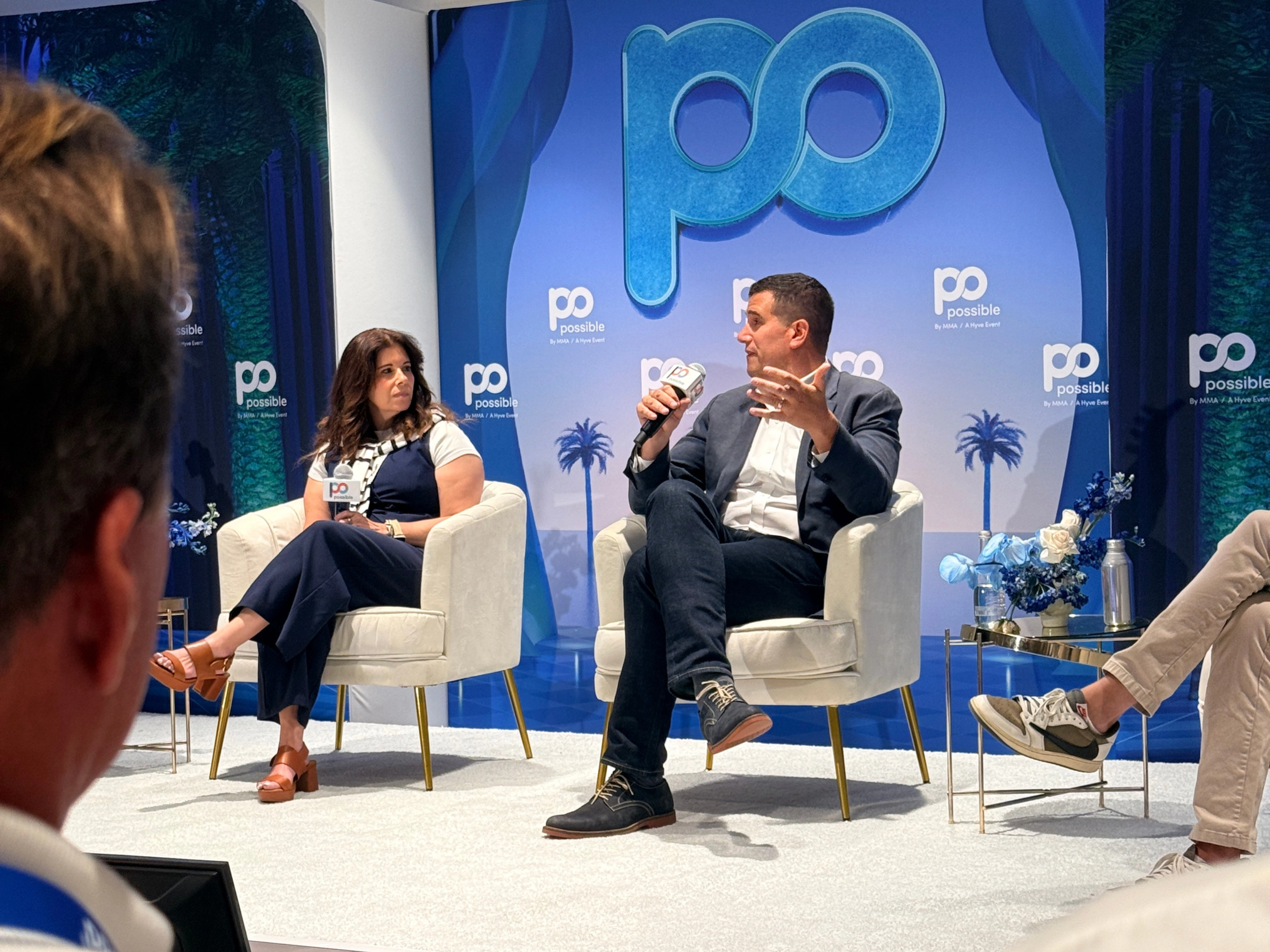

Last week, the advertising and marketing industry gathered in Miami Beach for POSSIBLE, one of the year's most anticipated events that brings together brand leaders, agency executives, and technology innovators from all over. The event has earned a reputation for cutting through the noise and providing space for hard conversations the industry actually needs to have. This year was no exception.
Among the dozens of sessions that generated real discussion, the Digital Place Based Advertising Association (DPAA) held a powerhouse panel discussion that unpacked one of the most exciting intersections in modern media: Connected TV and digital out-of-home (DOOH). Screenverse’s Co-Founder and CEO, David Weinfeld took the stage alongside other industry leaders at Publicis Media (Tracey Chavez) and Kochava (Grant Cohen) to discuss what everyone’s been talking about.
We sat down with David to give you all the tea you may have missed.
David Weinfeld Shares His POSSIBLE Insights & Panel Takeaways
“Coming out of my DPAA Panel during Possible, I’ve been reflecting on how much bigger the conversation is than the title we were given.
First, a genuine thank you to Barry Frey and the DPAA team for continuing to create a forum where real, substantive conversations can happen.
I also really appreciated the discussion with Tracy Chavez and Grant Cohen. Both brought perspectives that grounded the conversation in reality, which is exactly what this moment requires.
Tracy made a point that stuck with me. Agency teams are increasingly expected to understand the full media ecosystem, not just the channel they sit in. That shift is real, and it’s being driven directly by clients. The people making investment decisions are being asked to think holistically rather than in silos.
Grant pushed on something I think the industry still gets wrong. Measurement is not a “coming soon” story. The capability is here. The real issue is speed. Measurement that comes back three months later is interesting. Measurement that comes back in time to influence a decision is valuable. That distinction matters more than we talk about.
Those two threads, integrated planning and actionable measurement, are really what the panel was about, whether we framed it that way or not.
And they’re directly connected to something I heard consistently throughout Possible: the Open Web is under real pressure.
AI is changing how people find information, encounter brands, and consume media. Fewer clicks. Fewer pages. Fewer traditional impressions. That’s not theoretical. It’s already impacting how budgets are justified and allocated.
If your channel lives entirely inside that ecosystem, that’s something you have to contend with.
Digital out-of-home doesn’t have that problem.
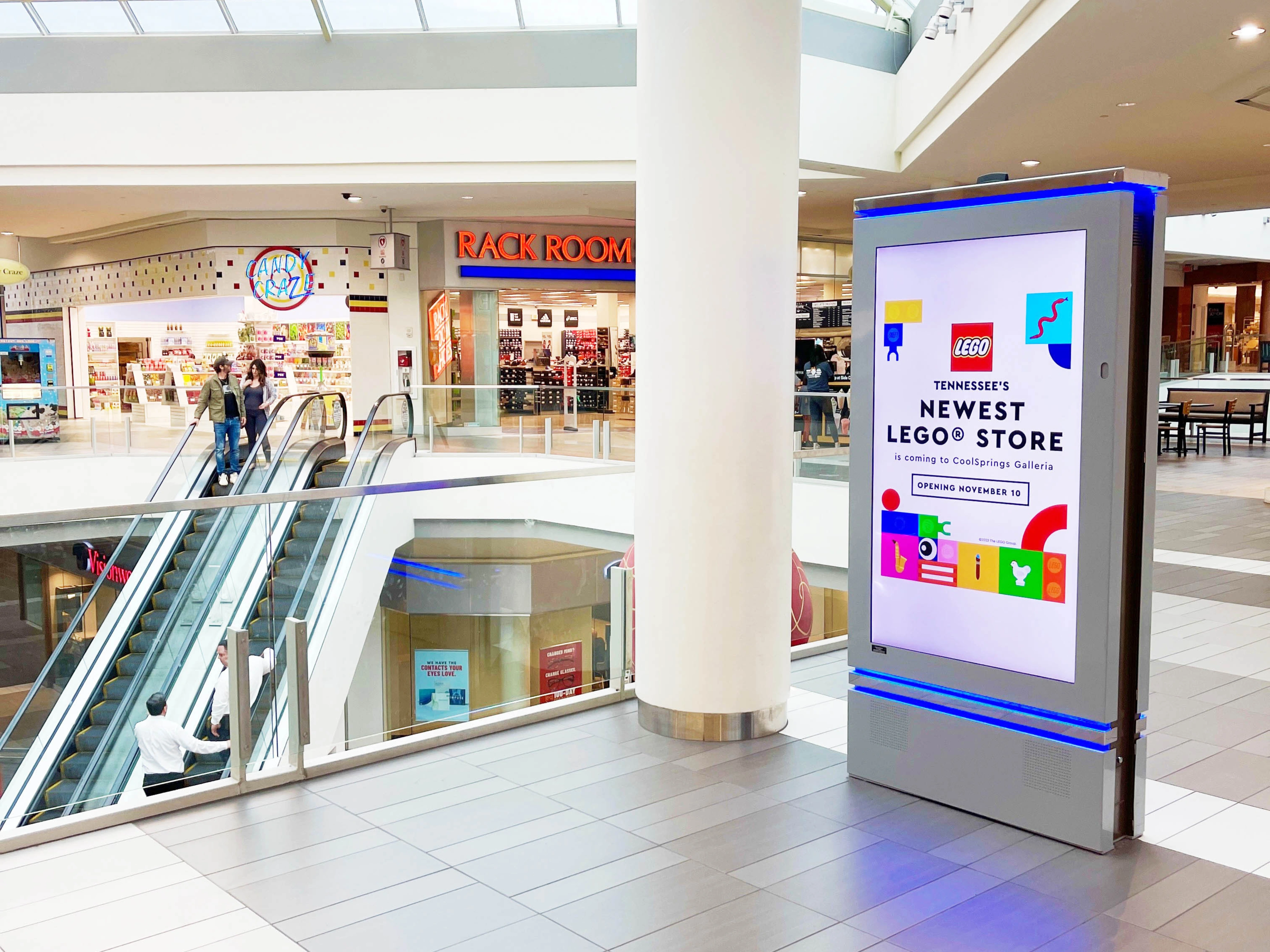
People are still going to gyms, sitting in offices, watching games at bars, traveling through airports, and shopping in stores. Those audiences aren’t being filtered, skipped, or blocked. They’re just there, in real environments, living their lives.
And increasingly, we can reach them with digital precision.
That’s not just an advantage. It’s a structural one. And we’re probably not making that case as clearly as we should.
At the same time, the structural challenges haven’t gone away.
DOOH still struggles to show up well in media mix models, and whether we like it or not, those models influence how budgets get allocated. But the issue isn’t the channel. It’s that we’re often using legacy frameworks to evaluate something that has evolved.
If the inputs don’t capture the value of real-world exposure, the outputs will underrepresent performance. That’s a methodology problem, not a media problem.
What gave me real optimism at Possible wasn’t just the conversation. It was the behavior.
Digital video buyers are leaning in. Omnichannel supply-side platforms (SSPs) and demand-side platforms (DSPs) are leaning in. There’s a growing recognition that this is not a niche channel.
In conversations with Place Exchange leadership, one point stood out. Programmatic DOOH is starting to show up as an always-on line item, not a test. That’s a very different signal than what we’ve seen historically.
We’re also still working through what to call this category.
Depending on who you ask, it’s DOOH, digital IRL, CTV IRL, digital video in the physical world, or something else entirely. That fragmentation in language reflects a deeper fragmentation in how the channel is perceived.
But underneath all of it, the reality is simple.
This is digital video delivered in the physical world.
And it should be transacted and measured accordingly.
From my perspective, the path forward isn’t about convincing people that DOOH deserves a seat at the table.
It’s about doing the work that earns it.
That means aligning with how video is already bought. It means ensuring measurement is fast enough to be actionable. And it means building the connective tissue, through data and experience, that allows this channel to operate within a truly omnichannel system.
Education matters. But education without proof doesn’t move budgets.
The energy at Possible was practical, not theoretical. Everyone, on both sides of the buy/sell equation, is trying to close gaps and figure out what actually works.
DOOH belongs in that conversation.
Not as a branding add-on.
Not as incremental reach.
As a performance channel.
As digital video.
As a real-world extension of the media ecosystem.
That’s the case worth making.
And it feels like the market is finally ready to hear it”.


.png)