Programmatic DOOH Explained
Return to Resources Hub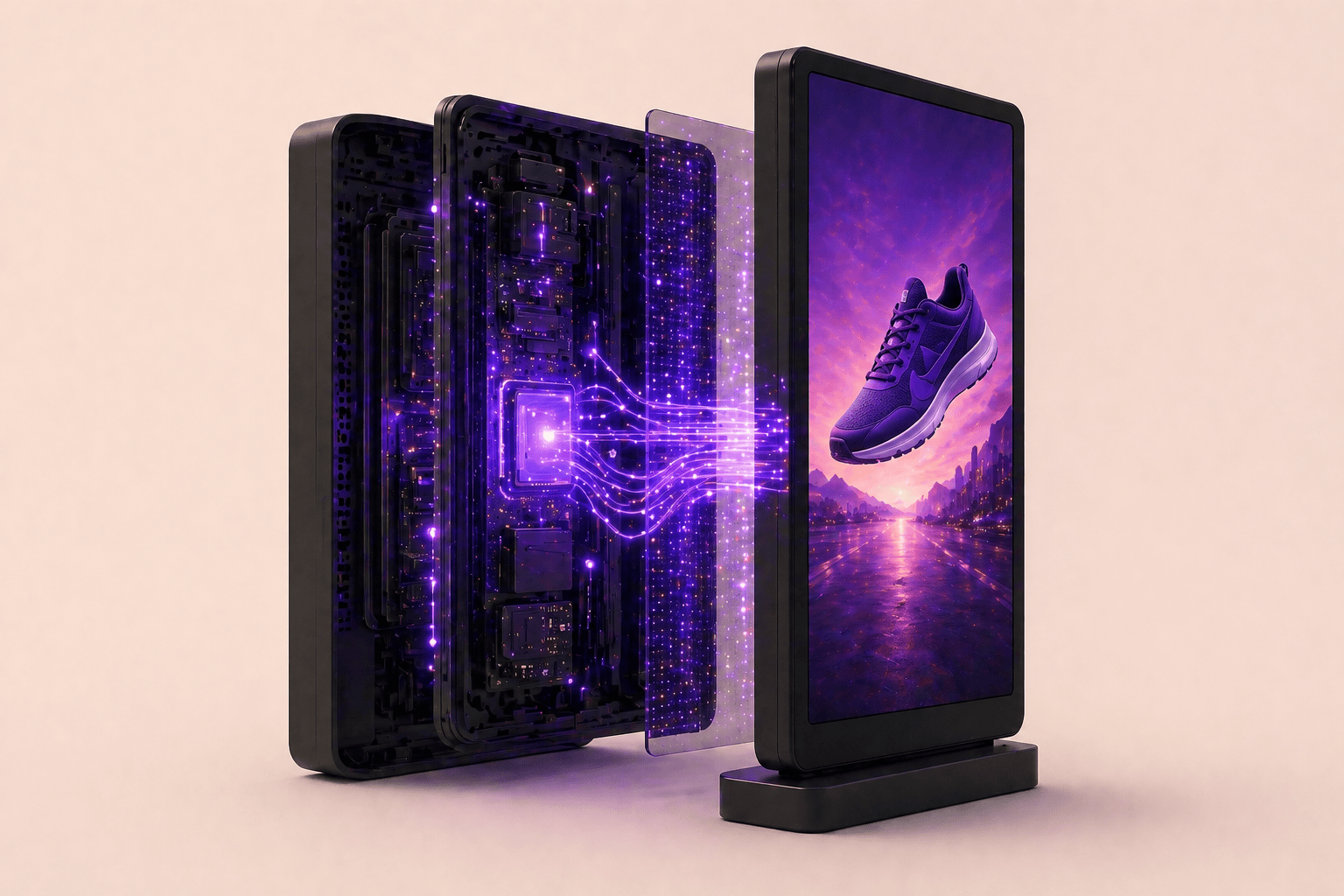
How Programmatic Digital Out-of-Home Advertising Works
Instead of negotiating individual placements with each media owner, advertisers can access thousands of digital screens across billboards, transit systems, retail stores, office buildings, and other environments through programmatic marketplaces.
Programmatic DOOH makes it possible to plan, target, and optimize campaigns across large networks of screens with the same technology used in digital advertising.
This guide explains how programmatic DOOH works, the platforms involved, and how advertisers use programmatic buying to activate campaigns across real-world environments.
Programmatic DOOH refers to the automated buying and selling of digital out-of-home advertising inventory using software platforms.In a programmatic transaction:
- advertisers use demand-side platforms (DSPs) to plan campaigns
- inventory is made available through supply-side platforms (SSPs)
- auctions or direct deals determine which ads appear on screens
This allows campaigns to be activated across multiple screen networks from a single buying interface.
Programmatic DOOH is a growing segment of the global out-of-home market because it allows brands to incorporate physical screens into broader omnichannel campaigns.
What Is Programmatic DOOH?
Traditional DOOH Buying vs Programmatic Buying
Understanding programmatic DOOH is easier when compared to traditional out-of-home buying.
Traditional DOOH
- Manual negotiations
- Fixed campaign placements
- Long booking timelines
- Limited targeting
Programmatic DOOH
- Automated buying platforms
- Dynamic inventory access
- Rapid campaign activation
- Data-driven targeting
Programmatic buying gives advertisers greater flexibility when selecting locations, audiences, and campaign timing.
The Programmatic DOOH Ecosystem
Programmatic DOOH operates through a set of interconnected platforms that facilitate transactions between advertisers and media owners.
Demand-Side Platforms (DSPs)
Demand-side platforms are used by advertisers and agencies to plan and purchase advertising campaigns.
DSPs allow buyers to:
- select target markets
- define audiences
- allocate budgets
- activate campaigns across multiple media channels
Examples of DSPs used for DOOH include:
- The Trade Desk
- Yahoo DSP
- StackAdapt
- Google Display & Video 360
These platforms allow buyers to integrate DOOH into broader omnichannel media strategies.
Supply-Side Platforms (SSPs)
Supply-side platforms represent the inventory owned by media companies and screen operators.
SSPs connect screen networks to programmatic marketplaces where advertisers can access inventory.
SSPs allow media owners to:
- list available screens
- define pricing
- manage inventory availability
- enable programmatic transactions
Examples of DOOH SSPs include:
- Vistar Media
- Hivestack
- Place Exchange
- Broadsign
These platforms connect thousands of digital screens to programmatic buyers.
Exchanges and Marketplaces
Exchanges facilitate the connection between DSPs and SSPs.
These marketplaces allow advertisers to discover and purchase inventory across many networks
In some cases, transactions occur through open exchanges, while others occur through private marketplaces (PMPs).
How a Programmatic DOOH Ad Is Delivered
A simplified version of the programmatic DOOH process looks like this:
- A brand plans a campaign using a DSP.
- The DSP identifies available inventory across connected SSPs.
- The advertiser bids or purchases inventory through the marketplace.
- The SSP sends the winning creative to the screen network.
- The ad is displayed on the selected DOOH screens.
This process allows advertisers to activate campaigns across thousands of locations from a single platform.
Brand
Campaingn Setup
Ad Placement
Ad Sent
Screens
People See Ad
Types of Programmatic DOOH Transactions
Programmatic DOOH supports several transaction types.
Open Exchange
Inventory available to any buyer connected to the marketplace.
Benefits:
- broad inventory access
- dynamic pricing
- Limited targeting
Private Marketplace (PMP)
Inventory available only to selected buyers through invitation-based deals.
Benefits:
- premium placements
- negotiated pricing
- preferred access
Programmatic Guaranteed
A fixed volume of inventory purchased programmatically at a predetermined price.
Benefits:
- guaranteed impressions
- predictable delivery
- streamlined campaign execution
Targeting in Programmatic DOOH
Programmatic DOOH allows advertisers to apply targeting parameters to campaigns.Common targeting options include:
- geographic location
- venue type
- time of day
- weather conditions
- audience demographics
- proximity to points of interest
These targeting capabilities allow brands to deliver contextually relevant messages in physical environments
Measurement in Programmatic DOOH
Measurement in DOOH differs from traditional digital advertising because impressions occur in real-world environments rather than individual devices.
Most DOOH campaigns are measured using:
- impression estimates
- audience measurement systems
- mobility data
- exposure modeling
Organizations such as Geopath and other measurement providers help estimate audience exposure for out-of-home advertising.
Benefits of Programmatic DOOH
Programmatic buying has accelerated adoption of DOOH advertising for several reasons.
Scalable Inventory Access
Advertisers can access thousands of screens across multiple networks through a single buying platform.
Faster Campaign Activation
Programmatic platforms allow campaigns to launch much faster than traditional out-of-home planning processes.
Flexible Budget Allocation
Campaign budgets can be adjusted dynamically across markets or environments.
Omnichannel Integration
Programmatic DOOH allows physical screens to be included alongside:
- mobile advertising
- connected TV
- display
- social media
Example DOOH Environments Available Programmatically
Programmatic DOOH inventory exists across many types of venues.
Common environments include:
- digital billboards
- urban panels
- transit displays
- gas stations
- retail stores
- gyms
- office buildings
- airports
- taxi and rideshare screens
Each environment offers different audience contexts and dwell times.
When Advertisers Use Programmatic DOOH
Brands often incorporate DOOH into campaigns when they want to:
- extend reach beyond digital channels
- increase campaign visibility in physical environments
- target audiences in specific locations
- reinforce messaging across multiple channels
DOOH is commonly used for brand awareness, product launches, and local market campaigns.
Programmatic DOOH in an Omnichannel Strategy
Modern advertising strategies increasingly combine digital channels with physical media environments.
Programmatic DOOH allows brands to extend their campaigns into the real world while maintaining centralized control through their media buying platforms.
For many advertisers, DOOH becomes an effective complement to:
mobile advertising
social campaigns
connected television
search marketing
This integration helps create consistent messaging across both digital and physical touchpoints.
Programmatic DOOH Glossary
Key Terms in Programmatic Digital Out-of-Home Advertising
Programmatic Digital Out-of-Home (DOOH) advertising uses automated software platforms to buy and sell ad inventory across digital screens in real-world environments.
Because programmatic DOOH combines elements of traditional out-of-home advertising with digital advertising technology, it introduces a number of specialized terms used by media planners, advertisers, and screen operators.
This glossary explains the most important terms used in the programmatic DOOH ecosystem.
DSP (Demand-Side Platform)
A Demand-Side Platform (DSP) is software used by advertisers and agencies to plan, buy, and manage advertising campaigns across digital media channels.
In programmatic DOOH, a DSP allows advertisers to purchase inventory across multiple digital screen networks from a single interface.
Through a DSP, advertisers can:
- set campaign budgets
- choose target markets
- define audience segments
- schedule campaigns
- activate ads across connected DOOH networks
Examples of DSPs used for programmatic DOOH campaigns include:
- The Trade Desk
- Yahoo DSP
- StackAdapt
- Google Display & Video 360
DSPs connect to supply-side platforms (SSPs) that represent available screen inventory
SSP (Supply-Side Platform)
A Supply-Side Platform (SSP) is technology used by media owners and screen operators to make advertising inventory available to programmatic buyers.
SSPs allow screen networks to connect their inventory to advertising marketplaces where advertisers can discover and purchase placements.
An SSP typically manages:
- screen inventory listings
- pricing rules
- campaign availability
- programmatic transactions
- reporting and delivery
Examples of DOOH SSPs include:
- Vistar Media
- Hivestack
- Place Exchange
- Broadsign
SSPs play a critical role in connecting digital screens to programmatic demand
PMP (Private Marketplace)
A Private Marketplace (PMP) is a programmatic deal where advertising inventory is made available only to selected advertisers.
Unlike open marketplaces, PMPs restrict access to specific buyers, often providing premium placements or negotiated pricing.
Private marketplaces are commonly used when advertisers want:
- access to premium inventory
- guaranteed quality environments
- preferred pricing agreements
- more control over where ads appear
PMP deals are negotiated between buyers and inventory providers but executed through programmatic platforms.
RTB (Real-Time Bidding)
Real-Time Bidding (RTB) is an automated auction process where advertisers compete for ad inventory in real time.
When an ad opportunity becomes available, multiple advertisers can submit bids, and the highest eligible bid wins the placement.
In many digital advertising channels, RTB auctions occur in milliseconds.
In programmatic DOOH, RTB may be used in certain marketplaces, though many DOOH transactions also occur through private marketplaces or fixed programmatic deals.
RTB allows advertisers to dynamically adjust bids based on campaign targeting criteria.
Impression Multiplier
An Impression Multiplier is used in DOOH measurement to estimate how many people are likely to see an ad during a single play on a screen.
Unlike online advertising, where impressions are tied to individual devices, DOOH screens are viewed by multiple people in shared environments.
For example: If a screen is estimated to have an average audience of 10 viewers during each ad play, a single ad play may count as 10 impressions.
The impression multiplier helps estimate audience exposure based on factors such as:
foot traffic
venue type
dwell time
audience modeling
Measurement organizations and analytics providers often use audience data to determine these multipliers.
Venue Targeting
Venue targeting refers to the ability to select advertising placements based on the type of physical environment where digital screens are located.
Examples of venue types include:
gas stations
retail stores
office buildings
gyms
transit stations
airports
digital billboards
Venue targeting allows advertisers to place ads in environments that align with their target audience or campaign goals.
For example:
- a fitness brand may target gym screens
- a financial services company may target office buildings
- a quick-service restaurant may target gas stations or transit locations
Venue targeting is a core component of programmatic DOOH campaign planning.
Additional Terms Often Used in DOOH
The programmatic DOOH ecosystem includes several other terms commonly referenced by buyers and media owners.
Open Exchange
An open marketplace where advertising inventory is available to any programmatic buyer connected to the platform.
Programmatic Guaranteed
A transaction type where advertisers purchase a fixed amount of inventory programmatically at a predetermined price.
Creative Loop
The sequence of ads that rotate on a digital screen. A loop typically includes multiple advertisers and repeats continuously throughout the day.
Play
A single instance of an ad being displayed on a screen.Multiple plays across multiple screens generate the total number of impressions for a campaign.
Why These Terms Matter
Understanding programmatic DOOH terminology helps advertisers and media owners communicate more effectively when planning campaigns and integrating screens into programmatic marketplaces.
Because DOOH combines elements of both digital advertising and traditional out-of-home media, familiarity with these terms makes it easier to navigate the ecosystem and execute campaigns successfully.


.png)